Rural communities
You already know the other organizations in your community. Now you can work from the same picture.
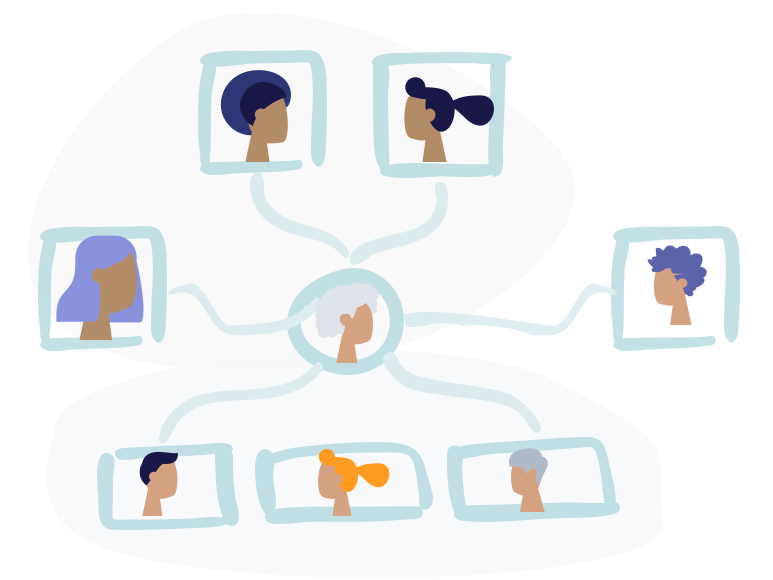
The hospital, the nursing facility, home health, the area agency on aging and the family each hold part of a person’s story, often an hour’s drive apart. HealthHive connects them around each person in your care, in a shared space called a Hive, using the systems each already has, without replacing the relationships rural care depends on.
What we hear
Distance makes every gap wider
The problems are the same ones everyone has. Out here, with fewer staff and longer drives, each one costs more.
“When someone comes home from the regional hospital, nobody here knows what happened there.”
Records stay where the care happened, two hours away, and the local team starts with whatever the family remembers.
“Our nurse drives an hour between visits. We can’t afford a wasted trip, or a missed one.”
Visits get scheduled by the calendar because there’s no way to know who needs one most.
“Out here, families and neighbors are the care system.”
They see the people you serve every day, and have no simple way to tell anyone what they notice.
“Losing one nurse means losing what she knew about half the county.”
In a small organization, one departure takes years of informal knowledge with it.
“Everyone here wears five hats. Nobody has time to learn another system.”
Small teams can’t absorb new software, new logins or new workflows.
“The organizations that serve the same people barely talk to each other.”
Each keeps its own records, and the family ends up as the only link between them.
Why it fits
Built for how care already works here
Here, the hospital, home health, the family and the community organizations aren’t separate worlds. They’re the same people, caring for the same person. That is the problem HealthHive was built for.
01
No integration needed to start
With consent from the person in your care, their Hive can bring in records from over 80,000 care settings, including the regional hospital, and their Medicare data, including full claims history for people in Original Medicare. Small organizations don’t need matching systems, or any connection at all, to begin.
02
One shared picture, wherever care happens
The hospital, the nursing facility, home health, aging services and the family can follow the same person, with their consent, each from the system they already use.
03
Family and neighbors can take part
Many contributors need nothing more than a phone, so the people who see the person every day can share what they notice.
04
Help deciding where the miles go
Signals from home help your team decide when a visit is needed, when every visit is a long drive.
05
Knowledge that stays when staff leave
What family and care partners share stays with the person, not with whichever employee heard it.
06
Help where people already go
Many of the people you serve already get help at the library, the senior center or the community center. HealthHive works there, alongside the people they trust.
Where to start
Start with one problem, big or small
You don’t have to bring the whole community along on day one, or change how anyone works. Pick the gap that hurts most.
A return home from the regional hospital or a nursing facility
Connect the local team and the family before the person in your care gets home, with the records from their stay already in hand.
The time between home health visits
Hear from the family, so the next drive goes where it’s needed.
Family caregivers supported by aging services
Give the family caregiver doing the daily work a way to be seen, supported and heard.
Questions from rural organizations
What if we don’t have an EHR, or have a basic one?
You can still start. Records come in with consent from the person in your care, and your staff work in the Portal, HealthHive’s view for your staff.
Does HealthHive work where connectivity is limited?
Yes. HealthHive is built to run on limited bandwidth, and family members and other care partners can share what they notice with nothing more than a phone. Many of the people you serve may already get online at the library, a community center or a senior center, where someone can help, and HealthHive works well there. It does need some connection; there is no offline mode. For someone who can’t reach those places and has no one to help, it may not be the right fit, and we’d rather say so up front.
How is it priced?
HealthHive is priced in three parts: a monthly platform fee, a monthly fee for each active Hive and, for larger undertakings, an implementation fee. We’ll walk you through what that means for your organization.
Keep exploring